In a remarkable reflection written after the 1986 season, Lou Holtz shared his thoughts on faith, football, academics, and the future of Notre Dame. Reading his words nearly 40 years later offers a fascinating glimpse into the foundation of a championship program.
Sometimes the most interesting pieces of history aren’t the stories written after something extraordinary happens. They’re the words spoken or written before anyone knows just how extraordinary the future will become. There’s something fascinating about looking back at a moment in time when the people involved had no idea what was waiting just around the corner.
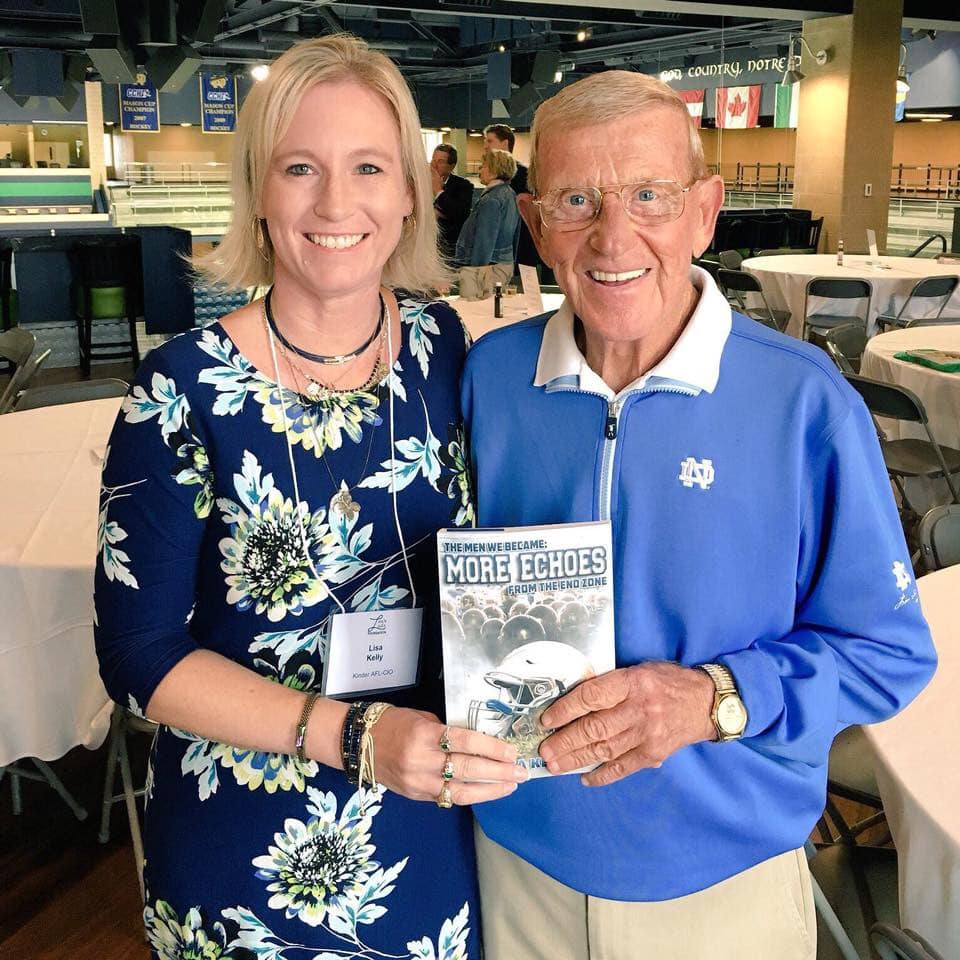
While researching Notre Dame’s 1986 victory over SMU for this week’s Flashback Friday, I stumbled across something that stopped me in my tracks. It was an article titled “Lou Looks Forward And Back,” written by none other than Lou Holtz himself for The Scholastic, reflecting on his first season as Notre Dame’s head football coach. And what a fascinating read it was.
We all know how the Lou Holtz era eventually unfolded. We remember the undefeated 1988 national championship season, the unforgettable victories, the legendary players, and the return of Notre Dame football to national prominence. But in this article, Holtz wasn’t looking back on championships or celebrating years of success. He was reflecting on a 5–6 season, acknowledging the challenges ahead, and explaining what he believed it would take to restore Notre Dame football to greatness.
Reading his words with the benefit of hindsight is a wonderful reminder that even the most remarkable accomplishments have humble beginnings.
A Season That Ended With a Spark
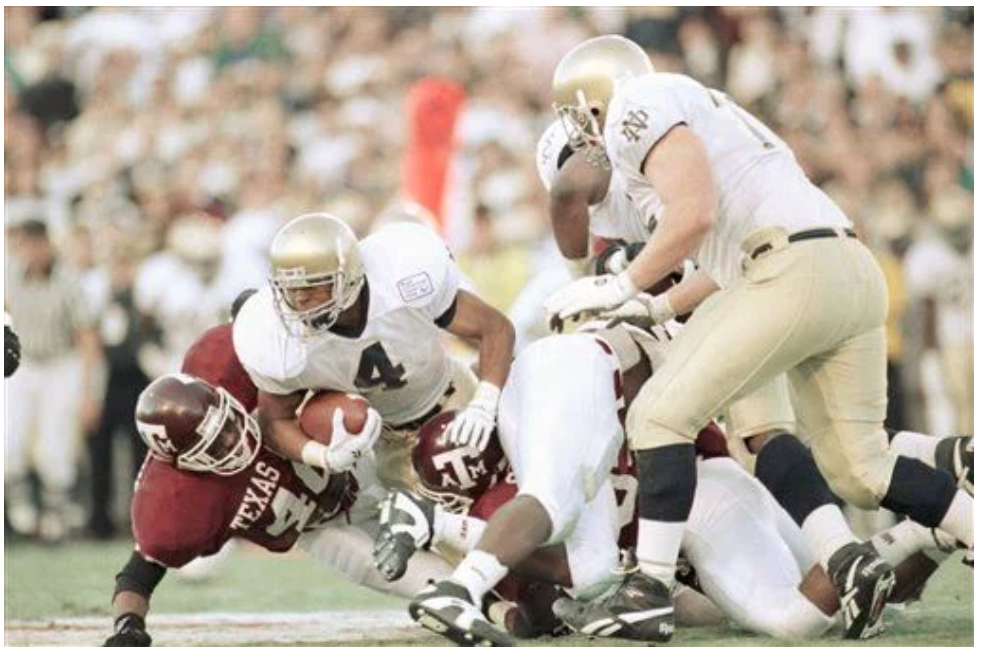
Holtz began his reflection by remembering the dramatic conclusion to his first season at Notre Dame. On November 29, 1986, the Irish traveled to Los Angeles to face Southern California. Notre Dame had endured a frustrating season, including five losses by a combined 14 points, but the finale offered one last opportunity to demonstrate the team’s progress.
Trailing USC late in the game, the Irish mounted a comeback that ended with a field goal on the final play, giving Notre Dame a thrilling 38–37 victory. It was the kind of ending that could change the way a team looked at itself. For Holtz, the victory represented more than a dramatic finish. He hoped it would establish the momentum his program needed heading into 1987.
Despite the losing record, Holtz believed something important had already been accomplished. The foundation for future success, he wrote, had been laid. Think about that for a moment. Notre Dame had finished with six losses, and there were questions about personnel, depth, and whether the program could return to the national stage. Yet Holtz wasn’t dwelling on the disappointment. He was looking at what his players had learned and what they could become, seeing possibilities that weren’t yet reflected in the standings.
Notre Dame Was About More Than Football
One of the things that struck me most about Holtz’s article was how much time he devoted to the University itself. He described his first year at Notre Dame as an overwhelmingly positive experience, not because of wins and losses, but because of the people and values he encountered. He wrote about trust, commitment, love, and faith, expressing admiration for the University’s leadership and appreciation for the dedication of its faculty, administrators, and staff.
He also spoke with genuine affection about the spiritual traditions that made Notre Dame special. Holtz described attending team Mass on game days and listening to Father Riehle, the team’s chaplain. He mentioned visiting the Grotto or Sacred Heart Church during difficult moments, finding comfort in places that have meant so much to generations of Notre Dame students, alumni, and families.
For anyone who has spent time at Notre Dame, those details feel especially meaningful. There’s something about the campus that stays with you long after you’ve left. The Grotto, the Basilica, the Golden Dome, the Victory March, and the traditions that connect generations of Notre Dame families are more than landmarks and rituals. They’re part of what makes the University feel like home, and Holtz clearly understood that from the beginning.
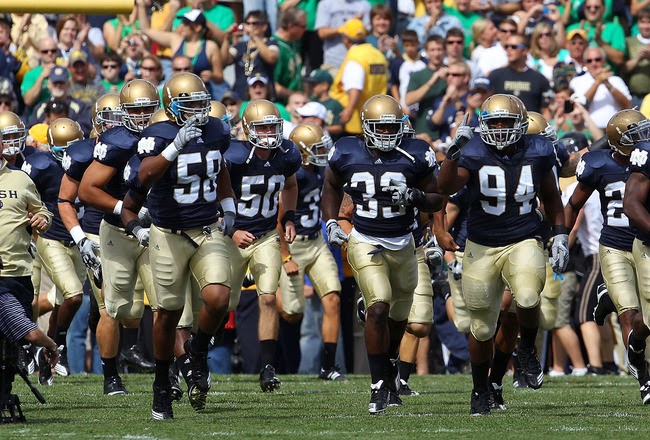
He even wrote about the feeling of walking through the tunnel on game day and hearing the band play the Notre Dame Victory March, promising that the experience would send chills down your spine. Nearly four decades later, I suspect most Notre Dame fans would agree.
Winning in the Classroom Mattered, Too
Another fascinating part of the article was Holtz’s emphasis on academics. He praised Emil Hofman, dean of the Freshman Year of Studies, and Mike DeCicco, academic advisor for varsity athletes, for their commitment to helping Notre Dame’s players succeed in the classroom.
Holtz explained that the football program had established a team grade-point average goal of 2.5. At first, that seemed like an ambitious target, but the players achieved it during the fall semester. He was proud of the accomplishment, although he made it clear that he expected continued improvement. The goal wasn’t simply to produce successful football players, but to help young men succeed in every aspect of their Notre Dame experience.
He also addressed concerns that Notre Dame might compromise its academic standards in pursuit of football victories, firmly rejecting that suggestion. Holtz discussed the circumstances surrounding two recruits whose standardized test scores had not been received when scholarships were offered. Notre Dame honored those commitments, he explained, while resolving to wait for test results before making future scholarship decisions.
It’s an interesting window into the challenges of building a competitive football program at a university with demanding academic expectations. Holtz wanted to win, and that much was obvious. But he also wanted his players to succeed as students and represent Notre Dame with integrity. He understood that the University’s academic reputation wasn’t something to be sacrificed along the way.
The Players Who Helped Lay the Foundation
One of my favorite passages in the article came when Holtz discussed the graduating seniors. He explained that football games aren’t won or lost because of one player, coach, kicker, or official. Success and failure belong to the entire team. Then he offered a different perspective on what constituted his most difficult loss.
For Holtz, it wasn’t any particular defeat on the football field. It was saying goodbye to the seniors who had helped him through his first season. He mentioned players such as Steve Beuerlein, John Carney, Robert Banks, Troy Wilson, Mike Kovaleski, Milt Jackson, and many others. He also made a point of recognizing the seniors whose names might not have been as familiar to the public, emphasizing that their contributions were no less important.
That detail says a great deal about how he viewed his team. Those players wouldn’t be on the field when Notre Dame won the national championship two years later, but they were there when Holtz was establishing expectations, demanding accountability, and trying to restore confidence in the program. They were part of the beginning, and Holtz understood that their contributions mattered, even if they wouldn’t be around to enjoy the ultimate reward.
There’s a lesson in that for all of us. Sometimes we help build something whose greatest success comes after our own chapter has ended. That doesn’t make our contribution any less important. In many ways, the people who help establish the foundation are just as essential as those who eventually stand at the top.
Even Lou Holtz Needed a Little Patience
If you’ve ever listened to Lou Holtz speak, you know that he has a wonderful ability to combine wisdom, determination, and humor. His article included a perfect example.
Holtz acknowledged that he was impatient to return Notre Dame to the top of college football. He wanted results, and he wanted them quickly. Athletic director Gene Corrigan, whom Holtz described as both a friend and an excellent leader, would remind him that Rome wasn’t built in a day.
Holtz’s response? “That’s because you weren’t the foreman.”
I laughed when I read that. It’s such a classic Lou Holtz line, and I could almost hear him saying it. But behind the humor was an important acknowledgment. Building a successful program would take time, and Holtz knew he needed people around him who could provide perspective.
He spoke warmly of Corrigan and legendary Notre Dame figure Moose Krause, describing how valuable it was to have trusted people to turn to when things became difficult. He also expressed respect for his predecessor, Gerry Faust, and the contributions Faust had made to the University. In fact, Holtz believed Faust should feel a part of Notre Dame’s future accomplishments.
That struck me as an especially gracious observation. Holtz wasn’t interested in pretending that Notre Dame football began the day he arrived. He recognized that every coach, player, and administrator contributed to the University’s history, and whatever success came next would be built upon the efforts of those who came before him.
Looking Ahead to 1987
Of course, Holtz wasn’t writing simply to reflect on the past. He was also preparing for the future, and he was remarkably candid about the challenges facing his team.
Notre Dame was losing a significant number of experienced players, including Beuerlein and Carney, and Holtz knew that replacing them wouldn’t be easy. He identified quarterback, the defensive line, the secondary, the kicking game, and overall depth as major concerns heading into 1987.
He also outlined an extensive recruiting wish list, including running backs, a power fullback, a quarterback, receivers, tight ends, linebackers, defensive backs, offensive and defensive linemen, a punter, and a placekicker. In other words, he needed a little bit of everything.
But here’s what I found particularly interesting. Despite acknowledging that the 1987 team might not be as talented as the 1986 squad, Holtz believed it could still be better. Talent alone wasn’t enough. Improvement, preparation, commitment, and teamwork would determine how successful the Irish could become.
And he was right to believe progress was possible. Notre Dame improved to 8–4 in 1987, and Tim Brown became the first wide receiver to win the Heisman Trophy. The following season, the Irish went 12–0 and claimed the national championship.
Reading Holtz’s concerns about quarterback, depth, and recruiting today is fascinating because we know how the story eventually unfolded. But he didn’t. He was still in the middle of building the program, identifying weaknesses, and trying to figure out how to turn potential into consistent success.
Looking Forward Instead of Back
Perhaps the most memorable observation in the entire article was Holtz’s explanation of why he preferred to focus on the future. He wrote that our eyes are in the front of our heads rather than behind us so we can see where we’re going instead of where we’ve been.
It’s a simple thought, but a powerful one, and it perfectly captures the spirit of what he was trying to accomplish at Notre Dame. He wasn’t ignoring the disappointment of a losing season or pretending that everything had gone according to plan. He knew the Irish had work to do, and he was willing to acknowledge the areas where they needed to improve. But he refused to let the past determine what came next.
As Notre Dame prepared to celebrate the 100th anniversary of its football program in 1987, Holtz reflected on the players, coaches, and administrators who had built its traditions. He promised that the current program would remain committed to the same principles, values, and standards. Looking back now, nearly 40 years later, there’s something especially meaningful about reading those words.
Because we know what was coming. We know about the 1987 improvement, Tim Brown’s Heisman Trophy, the emergence of players who would become Notre Dame legends, and the unforgettable championship season of 1988. But when Holtz sat down to write this reflection, none of those accomplishments had happened yet.
All he had was a football team coming off a losing season, a university he had grown to love, a set of values he believed in, and a vision for what Notre Dame could become. And perhaps that’s what makes this little piece of history so special.
It’s easy to believe in something once it’s successful. It’s much harder to believe when the results haven’t arrived, the critics are questioning your direction, and the road ahead looks uncertain. Lou Holtz believed anyway, and two years later, the rest of the college football world saw what he had been working toward.
Sometimes the greatest victories begin long before the scoreboard tells the story.
Go Irish! ☘️
This article was inspired by “Lou Looks Forward And Back,” a first-person reflection by Notre Dame head football coach Lou Holtz published in The Scholastic following the 1986 football season. Historical details and Holtz’s reflections are drawn from that original article.